Features
Everything it does, and the seven that matter most.
Milo is a year of one household’s worth of small, specific needs. Here are the seven we would keep if we could only keep seven, and then, with no editorializing, the whole list.
One: the question, twenty times a day
“When did he last eat?”
Time since the last feed, what it was, and when the next one is due, all at the top of the screen, the same on every phone in the house. A handoff needs no mental math and no texting.
The same clock runs for pumping and diapers, because those are the other two questions.
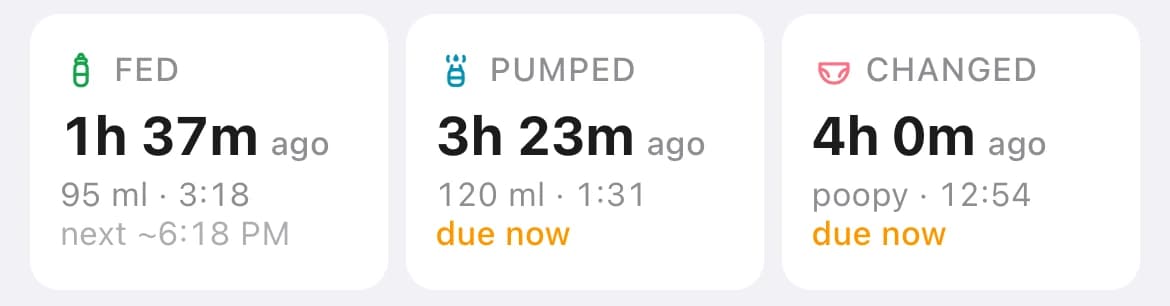
Whoever logged it, on whichever phone.
Two: the people who actually help
It takes a village
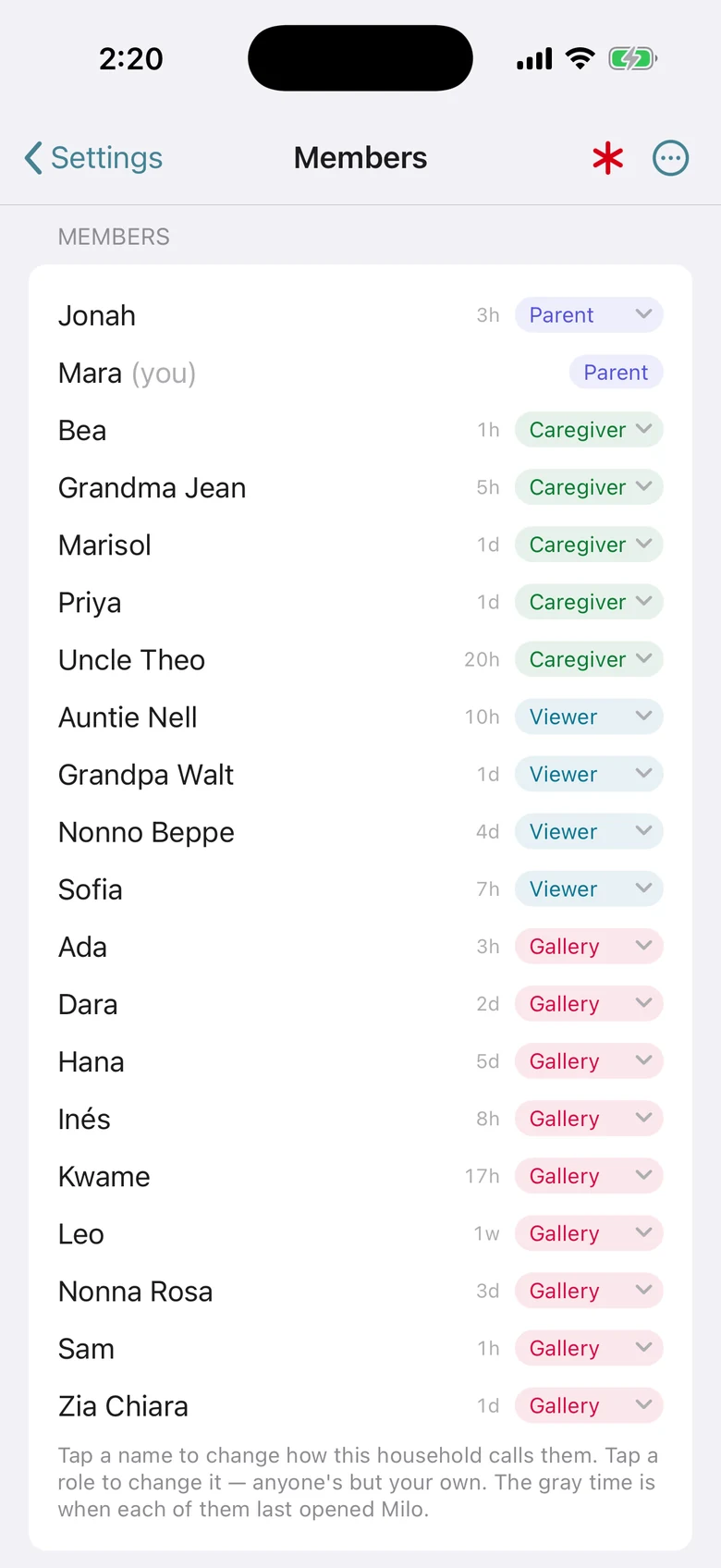
The grandmother who stays over, a doula for the first month, the night nurse, the friend who takes Tuesdays. Add them and they log what they do, so everyone works from the same numbers instead of the same group chat. Every entry carries who logged it, so the timeline answers “was that you or me?” by itself.
Then there is everybody else: the godparents, the aunt three time zones away, the friends who just want to see him. Invite them at the gallery level and the baby pictures are all they get.
Four levels in all, and the line between them is drawn by the database itself rather than by hiding buttons.
Three: the number you were given
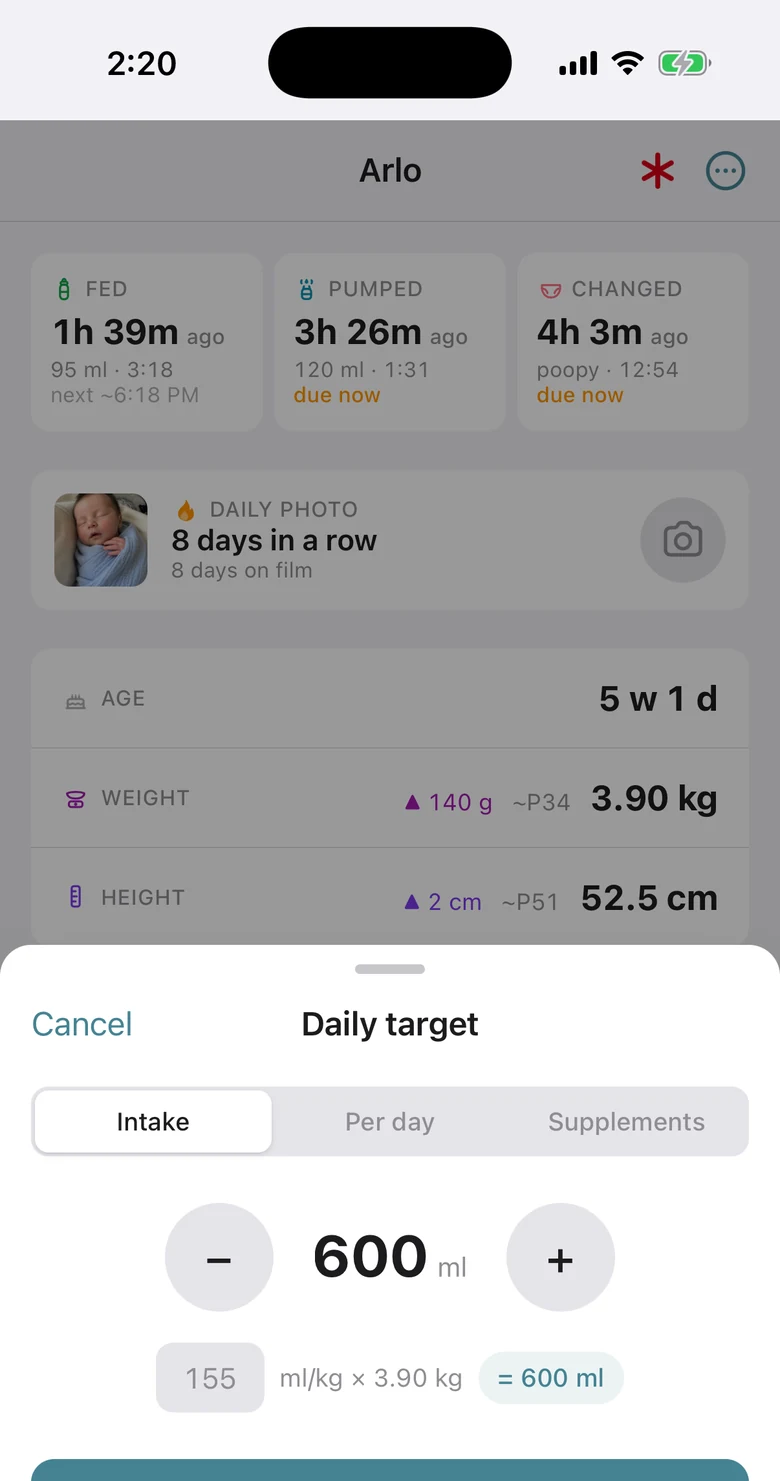
How much he needs today
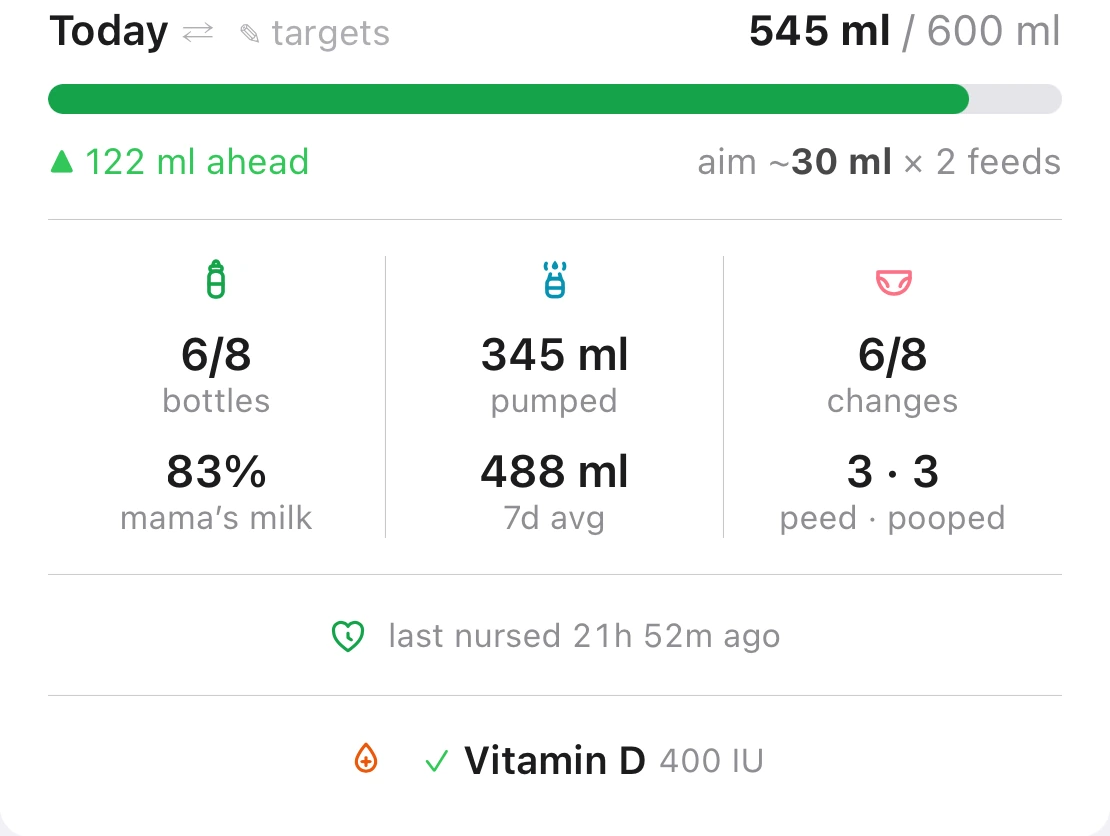
Your doctor gives you a figure in milliliters per kilo per day. Milo does the rest of that sum for you, against this week’s weight, every day, and the day’s bar shows the total against it and whether you are ahead or behind for this hour.
When the doctor revises the figure, the old one stays on the old days: last month’s chart still tells the truth about last month rather than being quietly redrawn.
These are rules of thumb. Your pediatrician’s number wins, and the app says so where you set it.
Four: the whole day, and not only the feeds
Bottles, nursing, pumping, diapers, supplements, weight and height
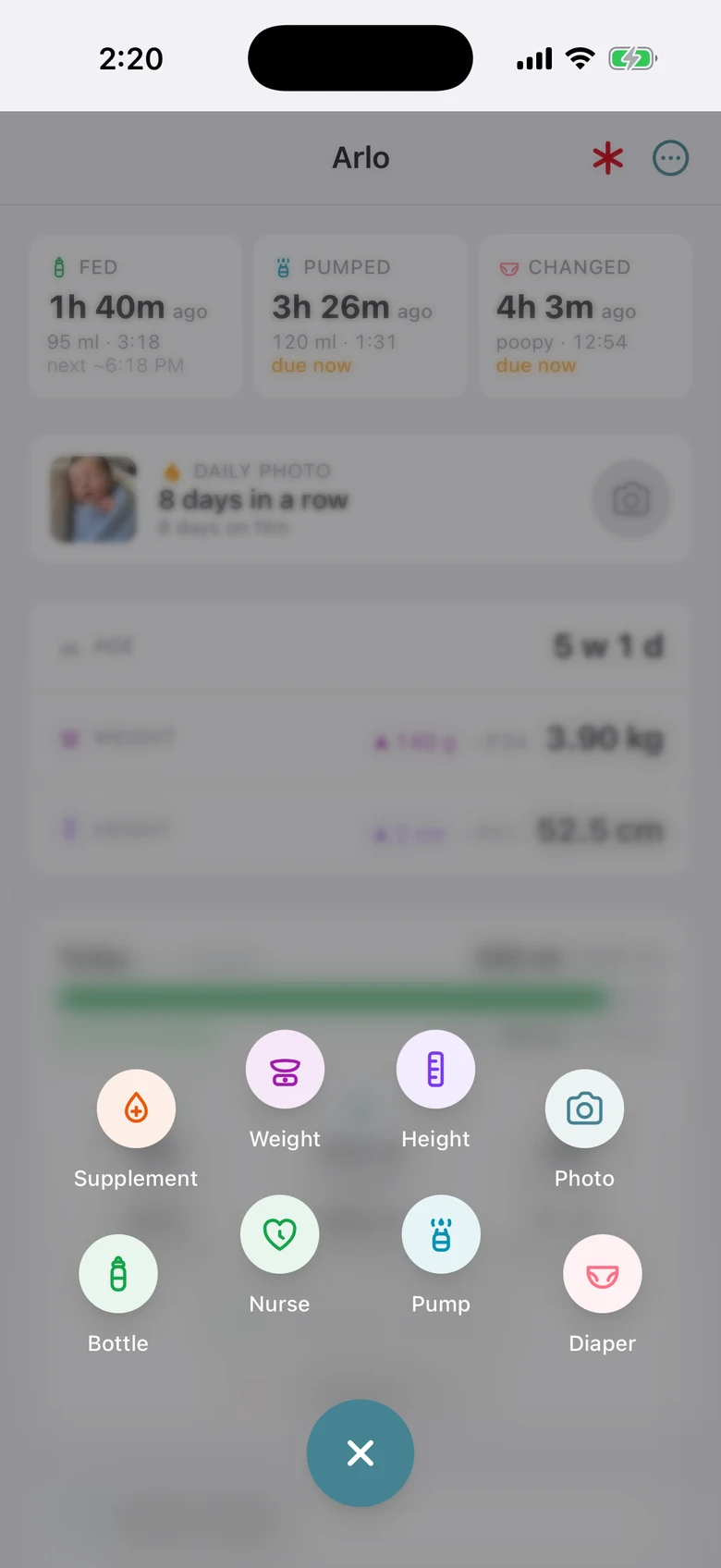
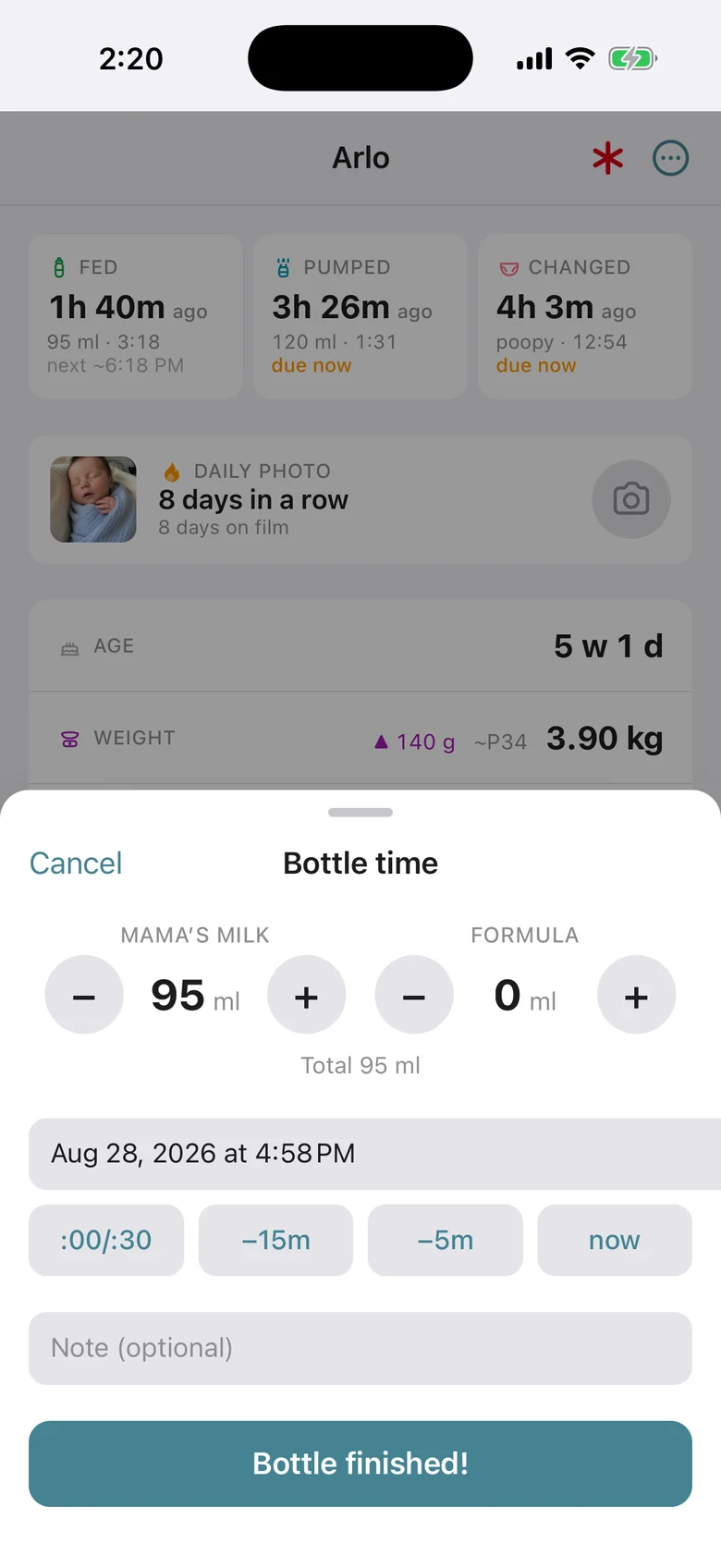
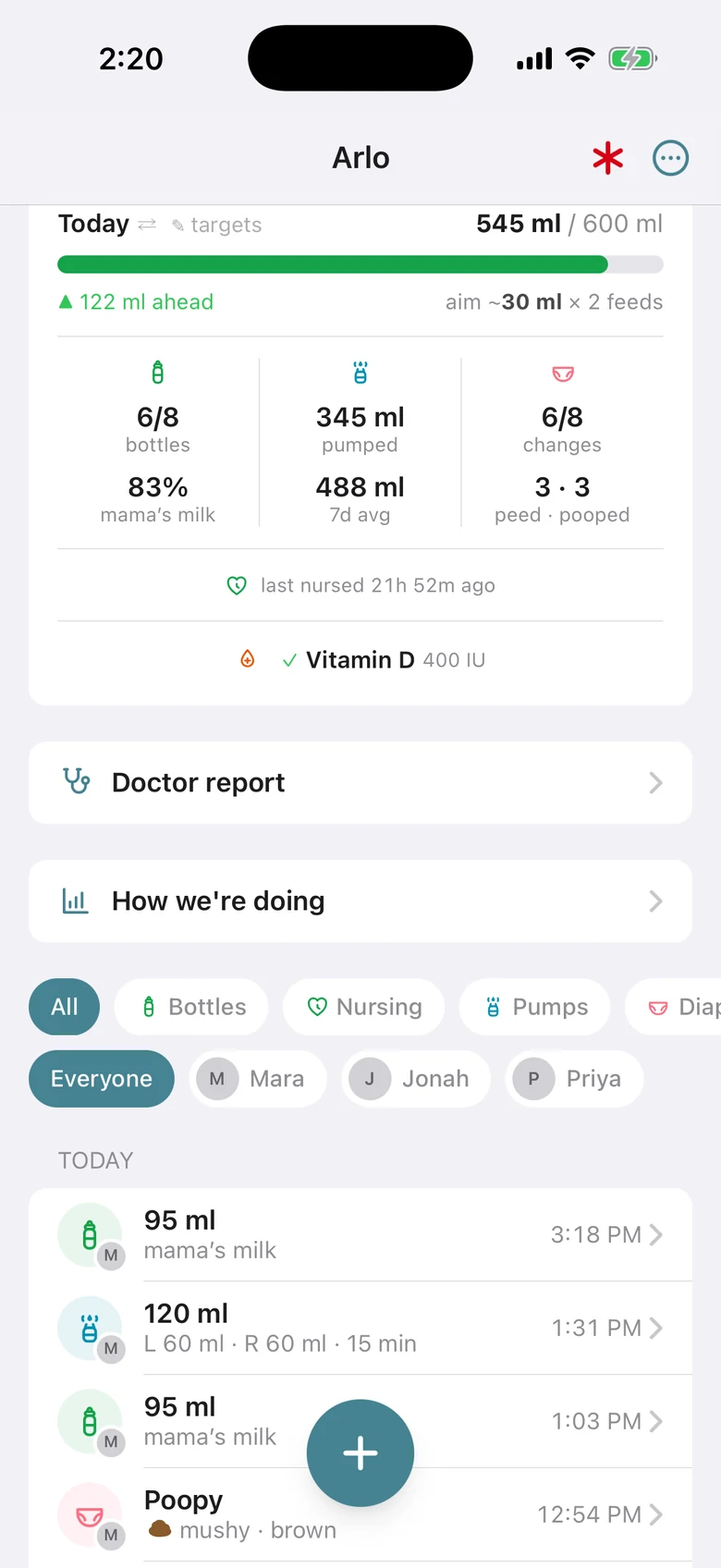
Two taps for a bottle, prefilled from the last one. Nursing runs a timer per side and leaves the volume alone, because that number is unknowable, and a guess would poison the totals. Pumping is tracked on its own, because the person pumping has a schedule of their own to keep. Diapers, the vitamin D you have already forgotten whether you gave, and every weight and height from every appointment.
All of it in one place, on whichever phone is nearest, tagged with who logged it.
And then you can see it over time
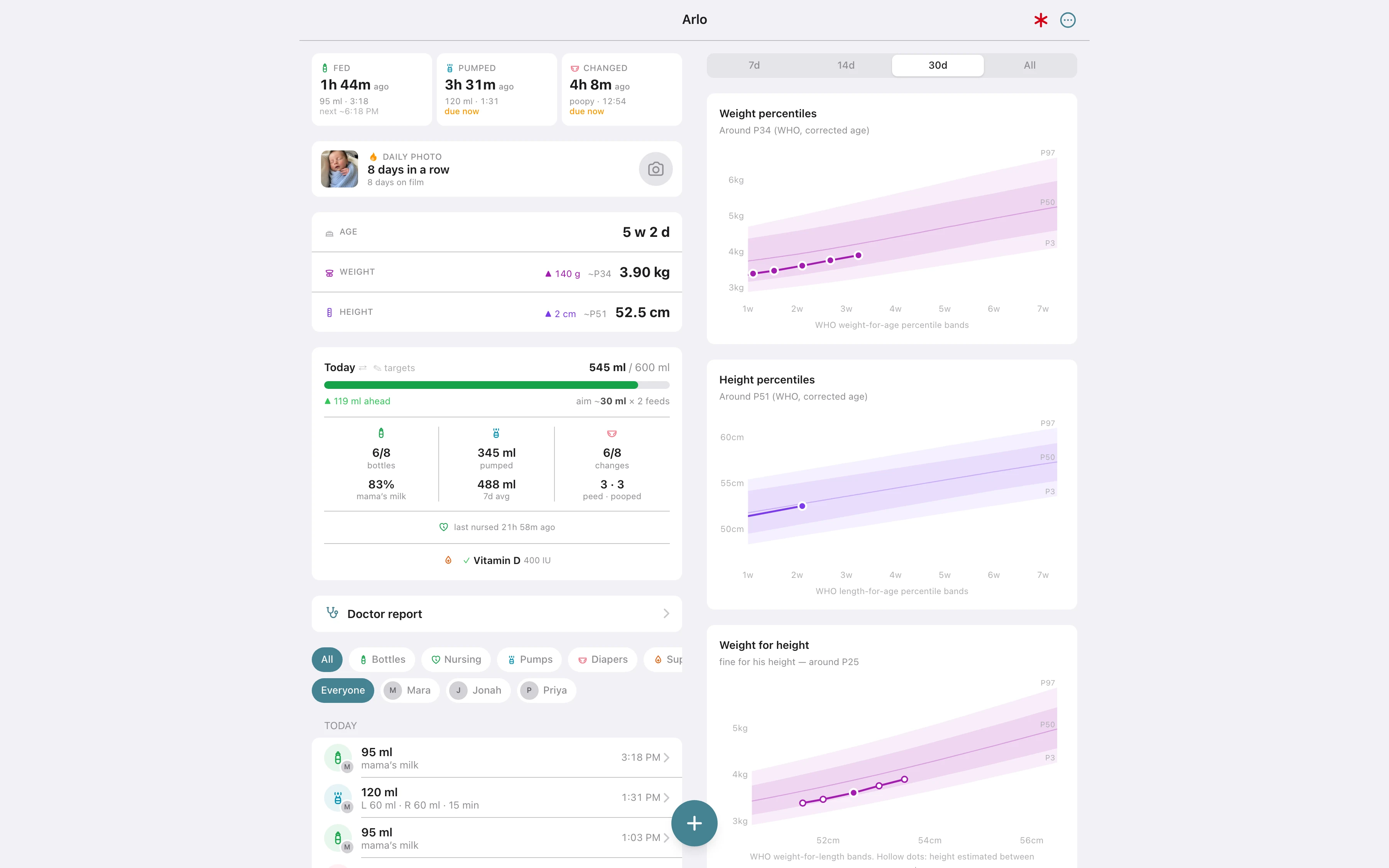
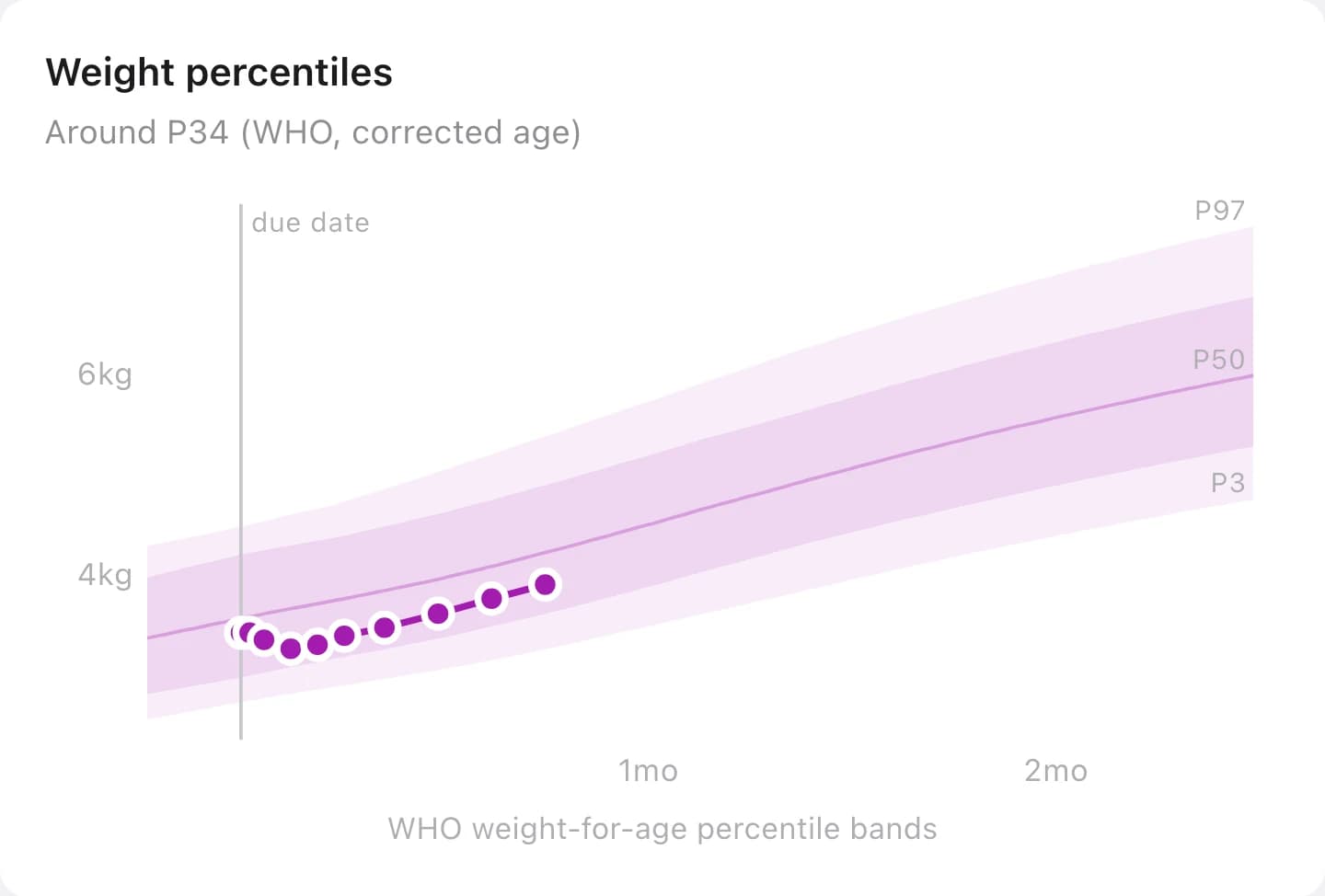
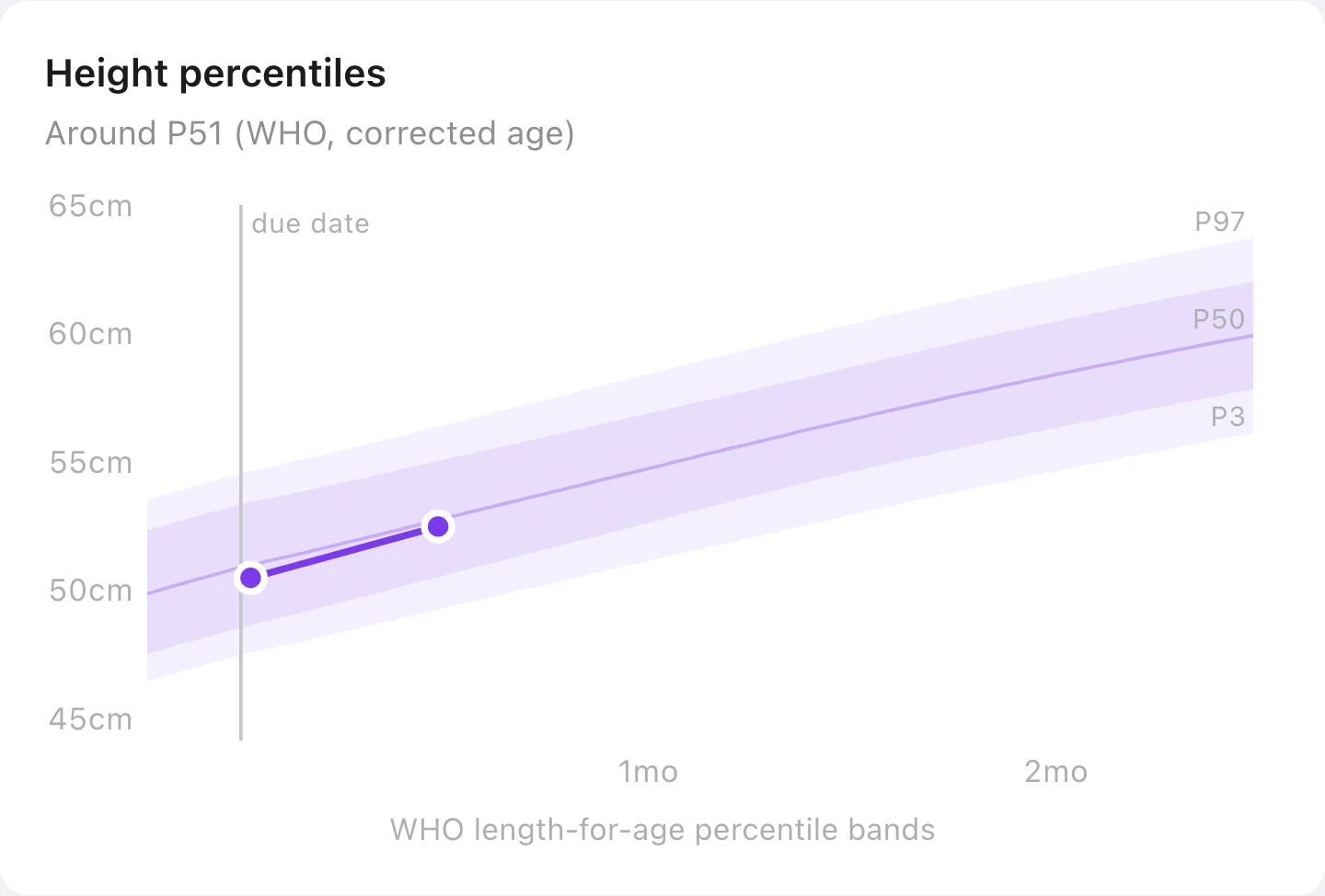
Every one of those taps turns into a line. Intake per day against the target, stacked by breast milk and formula. Weight and height on the percentile bands: the preterm ones before the due date, and corrected age after. What proportion of the day was mama’s milk. When the feeds actually fall, and how long the gaps really are.
Five: the appointment, and the bad night
The questions you had at 4am, in the room
Everybody has the same three questions at four in the morning and none of them at eleven the next day, standing in front of the person who could answer. So write them down when you have them: they go in the app, they wait, and they are on the page when you open it in the waiting room. Tick them off as they get answered.
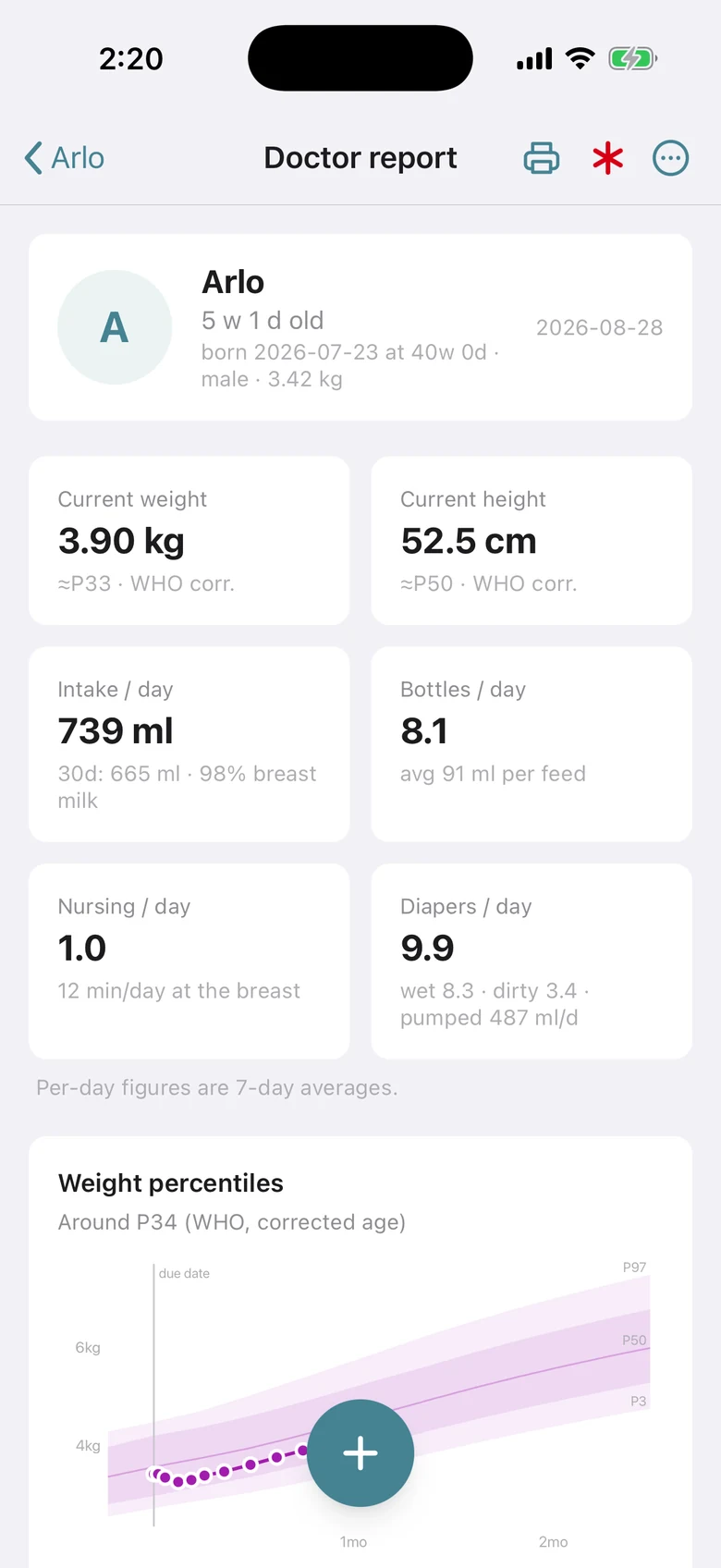
They come out on the report, which is otherwise a single sheet: weight and height against the curves, intake and diapers per day, and the vaccination record. It prints.
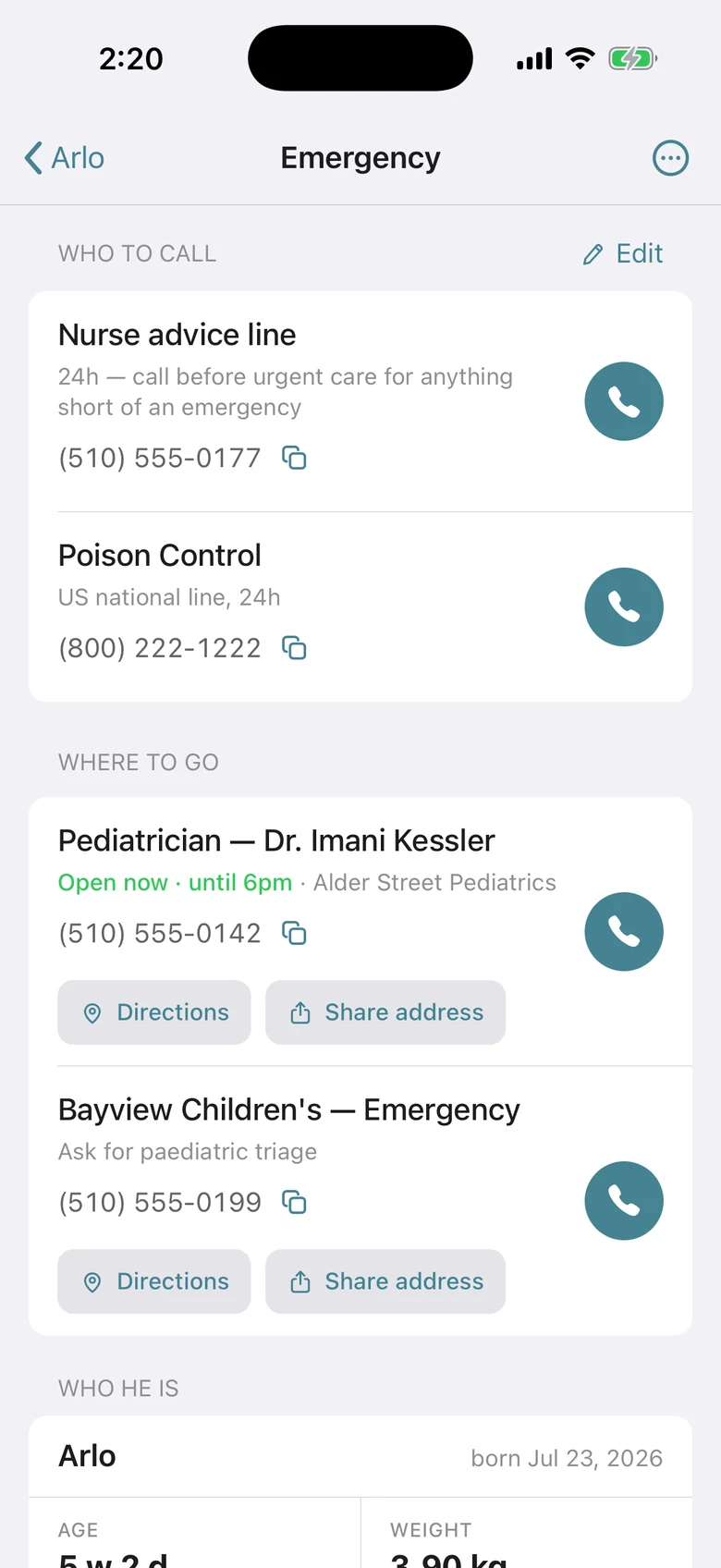
The emergency card is the other half of the same idea, for the other kind of night: who to call, where to go and what he weighs, derived live so a dose is never off a stale number. Whoever is holding him has it on their own phone.
Six: the part everybody actually loves
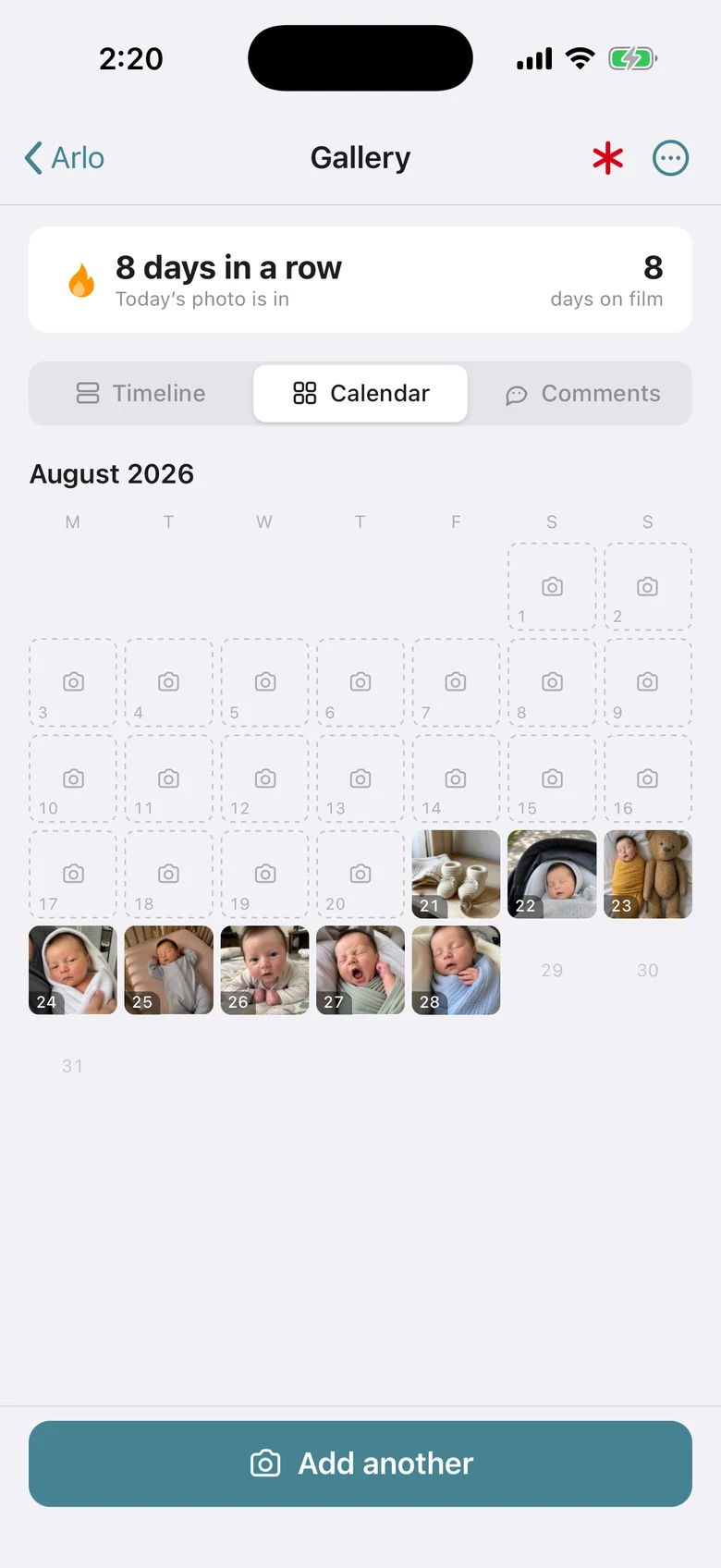
A photo a day for the people you chose
One picture a day, in a private gallery, with a comment thread under each one. Grandparents, godparents, the aunt three time zones away: invite them at the gallery level and that is all they see. Not the log, not the weights, not the emergency card.
No feed, no algorithm, no strangers, and no company filing your child’s face away for as long as it exists. Photos are served through links that expire, not public URLs. It is the reason a lot of families stay, and it is the part we would least like to give up.
Seven: how it gets better
Tell us what to build. We answer.
There is a chat bubble in the app. Write what is broken, what is missing, or what you would do differently, and it comes straight to us. It is a thread you can come back to, and it does not disappear. We read every one and we reply, in the language you wrote in.
Small, clear things tend to just get built, and you get told when they ship. Bigger ones get a question back, because we would rather ask than guess. Almost everything in the list below started as somebody saying this bit is annoying. Most of it, at the beginning, was us.
Milo is a small thing made by two parents. That is exactly why it can be built with the people using it rather than at them.
And the rest of it
The whole list
Everything here is built and in use. Anything we are still working on is not on this page.
Logging
- Bottles
- Breast milk and formula in the same entry, prefilled from the last one.
- Nursing
- A timer per side, left and right, with no invented volume.
- Pumping
- Output per session, L/R split, and pumped-minus-consumed per day.
- Diapers
- Wet, dirty or both, with texture and color when it matters.
- Weight & height
- Whenever you measure, in grams or pounds as you prefer.
- Supplements
- Vitamin D and the rest, ticked off against the day.
- Notes
- On any entry, and on their own when something just needs saying.
- Backdating
- Snap to the last half hour, nudge by five minutes, or pick the time.
Seeing it
- Daily intake vs target
- Stacked by milk and formula, with a 7-day average.
- WHO percentiles
- Weight and height on P3–P97 bands, offline, from bundled data.
- Preterm curves
- Fenton 2013 bands before the due date, WHO and corrected age after.
- Mama's-milk share
- What proportion of the day was breast milk, over any range.
- Patterns
- Feeds and diapers by hour of day, and how long the gaps really are.
- The day's timeline
- Every entry, tagged with who logged it, filterable by person.
The household
- Four roles
- Parent, caregiver, viewer, gallery. Enforced by the database.
- Invites
- A code you hand out; nobody joins a household by knowing its address.
- The photo gallery
- A picture a day, with comments, for the people you invited.
- Notifications
- A quiet nudge when somebody else logs a feed or comments.
- Share one entry
- A single link to one entry, for the person who is not in the app.
The doctor, and the bad night
- The one-page report
- Weight, intake, diapers and nursing since the last visit. It prints.
- Questions
- The ones you wrote at 4am, on the page when you're in the room.
- Vaccination card
- What was given and when, on the phone in your pocket.
- Emergency card
- Who to call, where to go, and a weight computed live.
- Insurance & conditions
- Policy numbers, allergies and medications, on the same card.
Your data, and the app itself
- Nara Baby import
- Your whole history in one upload, de-duplicated on the way in.
- CSV export
- Everything you logged, whenever you like, without asking.
- Installs like an app
- To the home screen on iOS and Android. No app store.
- Phone, tablet, laptop
- The same log, spread into two panes where there's room.
- English, Italiano & Español
- Per person, with dates and clocks to match.
- ml or oz, g or lb
- A display choice. The numbers underneath never change.
Easy to get started and available where you need
Milo installs to your home screen, and the same log opens on a tablet by the changing table or a laptop at the kitchen counter, where it spreads out into two panes.