Our story
We built Milo in the weeks after our son came early.
We are Kilian and Penelope, a dad and a mom. Our son was born at 35 weeks by emergency C-section, and nothing about that day was in the plan we thought we still had weeks to finish making.
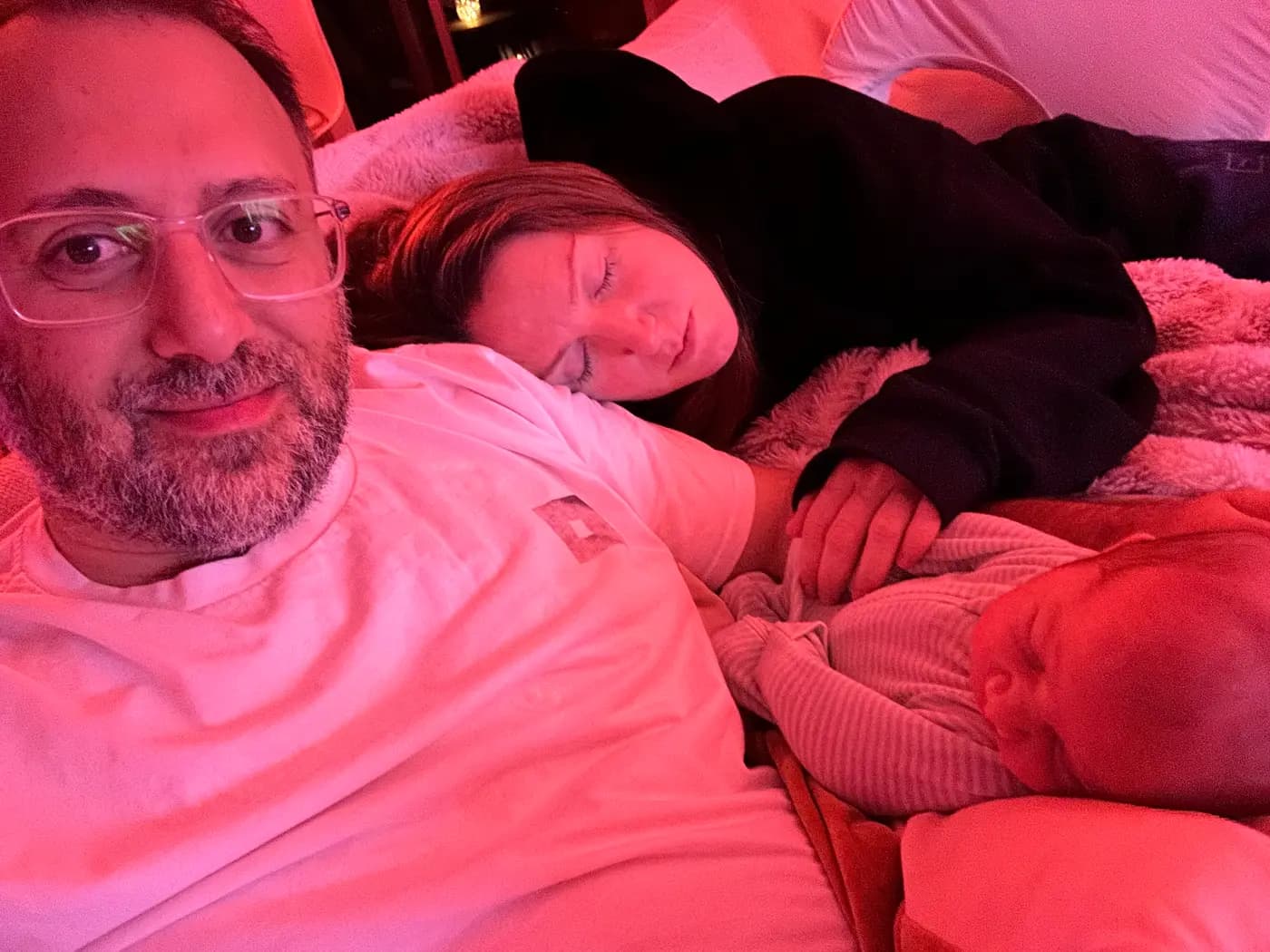
Eating took more energy than he had
That is the part nobody had prepared us for. He could latch, suck, and swallow. The mechanics were there; the stamina was not. A full feed could spend more energy than it gave him, so the job in front of us was to get weight and fat onto a tiny person who tired before he was full.
Every milliliter mattered. So we learned to nurse, pump, fortify, bottle, weigh, and start again, in a week, on no sleep, in a hospital. We had believed those were things we would learn slowly, later, at home.
The math followed us everywhere
The doctors gave us targets and measurements: milliliters per kilo per day, grams gained since yesterday, how many diapers counted as reassuring. All of it changed each time somebody weighed him. Between feeds we were trying to answer questions that should have been simple: when did he last eat, how much did he take, was that before or after the weigh-in.
We started writing it on paper. The paper got lost, and being unable to answer a doctor’s simple question at nine in the morning is its own particular kind of awful. So we built the first screen: the last feed, the amount, and when the next one was probably due.
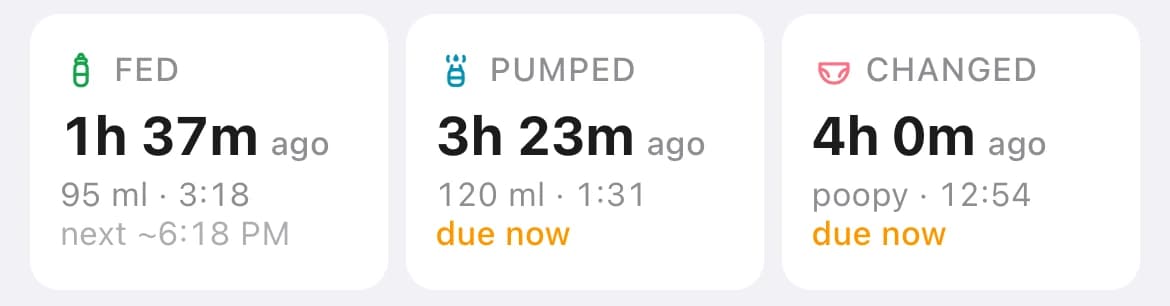
The first thing we built, and still the first thing on the screen.
The charts were for our nerves
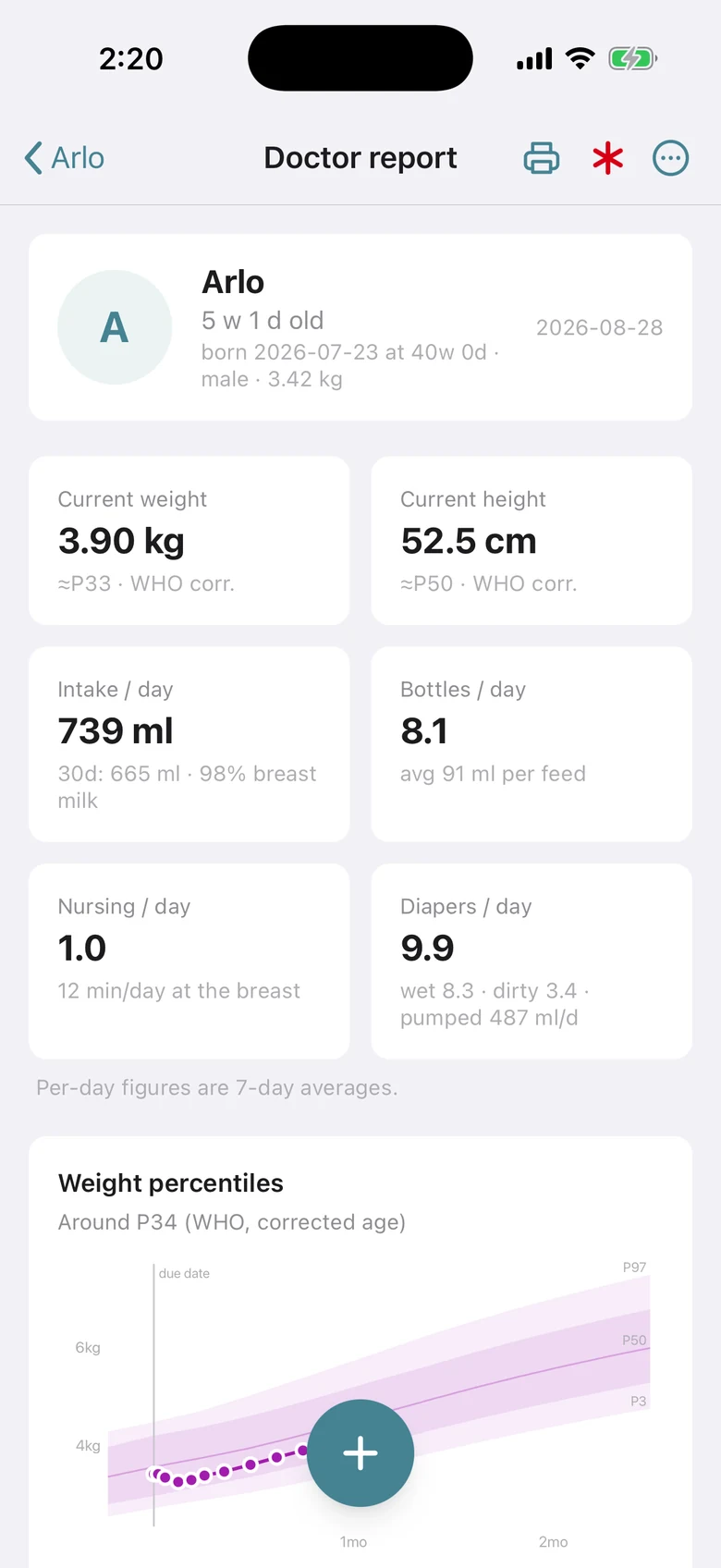
Feeds, nursing, pumping, weight, logged as they happened and drawn against the curves other babies are on. And against the right ones: a baby born at 35 weeks does not belong on a term chart, so Milo plots the preterm bands until the due date and switches to corrected age after it. Watching a line climb back toward where it was supposed to be gave us a kind of quiet that reassurance alone could not.
The same log became the sheet we brought to appointments: weight and height against the WHO curves, intake per day, and the questions that vanish from your mind the moment the doctor walks in.
Then: who do we call, and where do we go
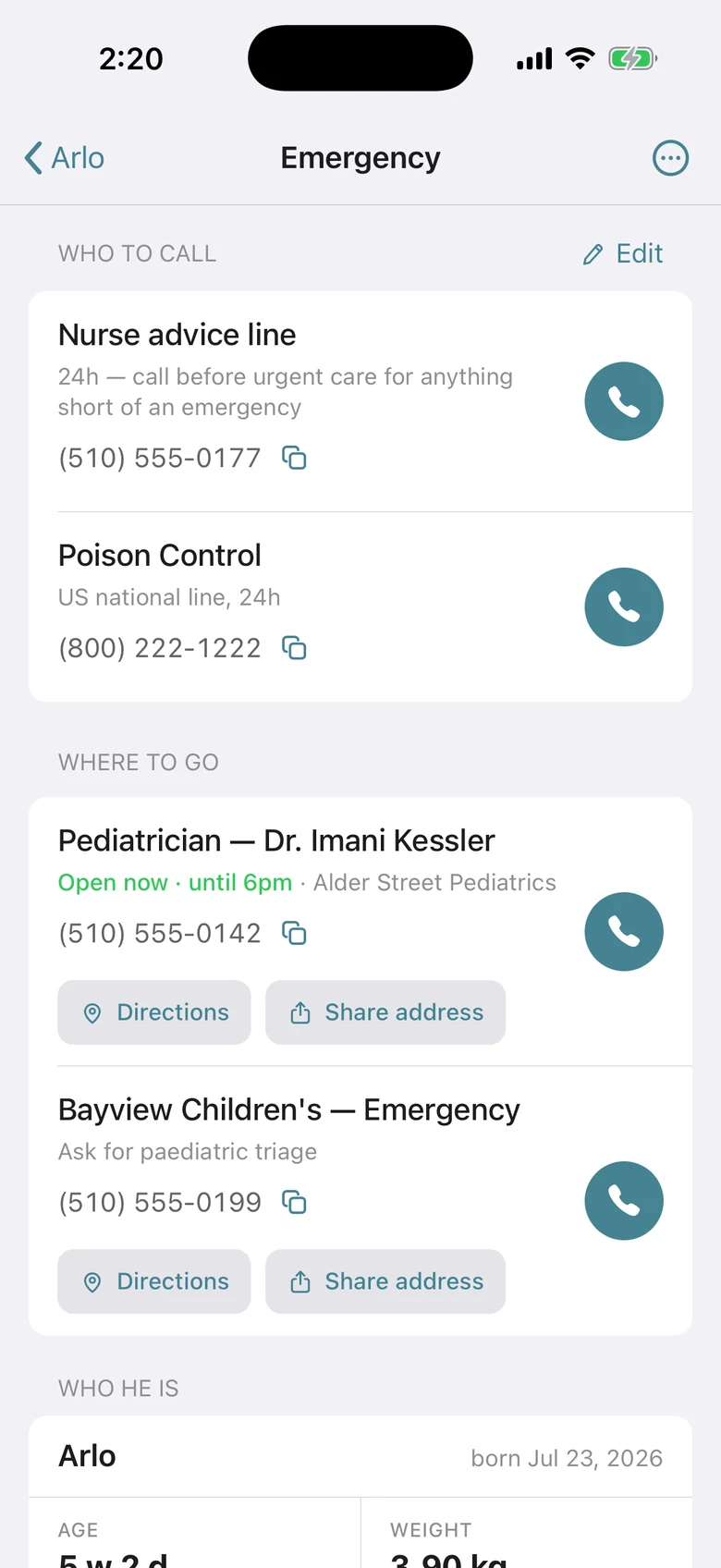
One bad night we found ourselves searching the internet for the nearest hospital while holding a baby who did not look right. Nobody should be typing a search query in that state. So Milo learned the other half of the job: the numbers to call and the door to walk into, written down in advance, with his current weight computed live, because a dosing weight is worth nothing if it is three weeks old, on every phone that is allowed to have it.
A gallery instead of a feed
Our friends and family wanted to see him, and we wanted them to. What we did not want was our son’s face on a social network, filed away by a company we will never meet, for as long as that company exists. So he has a photo a day, in a private gallery, for the people we invited. A grandmother sees the photo and nothing else.
It has turned out to be everyone’s favorite part, ours included.
His picture is at the top of this page because we decided to put it there, and we could take it down this afternoon. That is the entire difference, and it is the one a feed takes away from you.
Which is also why we are strict about your data
We are the kind of people who read the policy before signing up, and we built Milo to survive our own reading of it. Nothing you log is sold, shared, or used to train anything. There are no ads and no third-party trackers in your household. Nobody measures a mother logging a night feed. Households are isolated from one another, by the database itself rather than by us being careful. Photos are served through links that expire, not public URLs. And you can export everything, or ask us to delete it, without a conversation. The whole of it, in plain sentences.
He is fine now
He gained the weight. Feeding stopped taking everything he had. The app kept growing with him. Every part of it exists because one of us needed it on a specific bad day, and none of it was designed in a meeting.
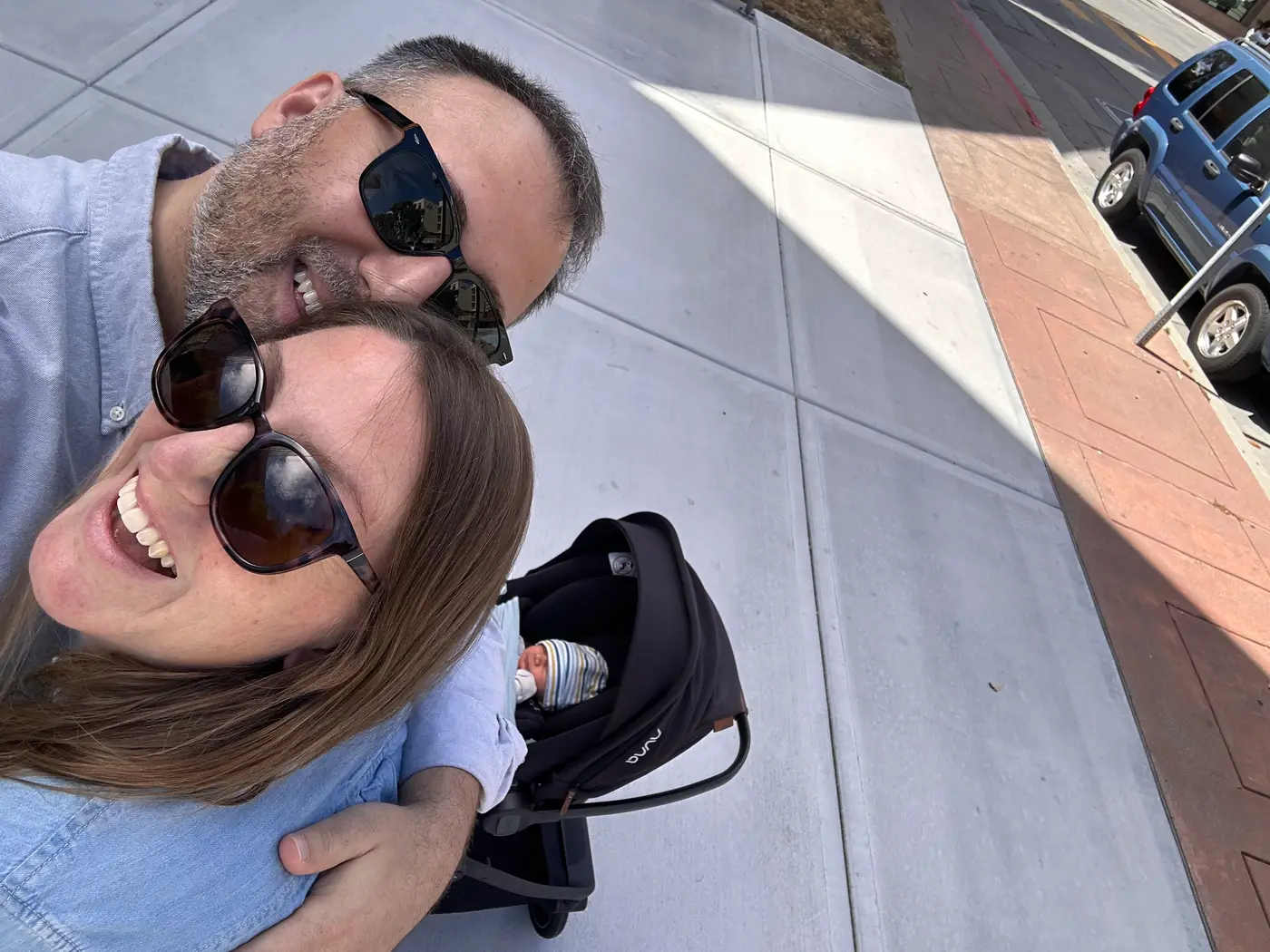
We are opening it up to other families now, because we keep meeting parents in the same week we were in. If that is you: come in, and we answer our own email.
Kilian & Penelope